
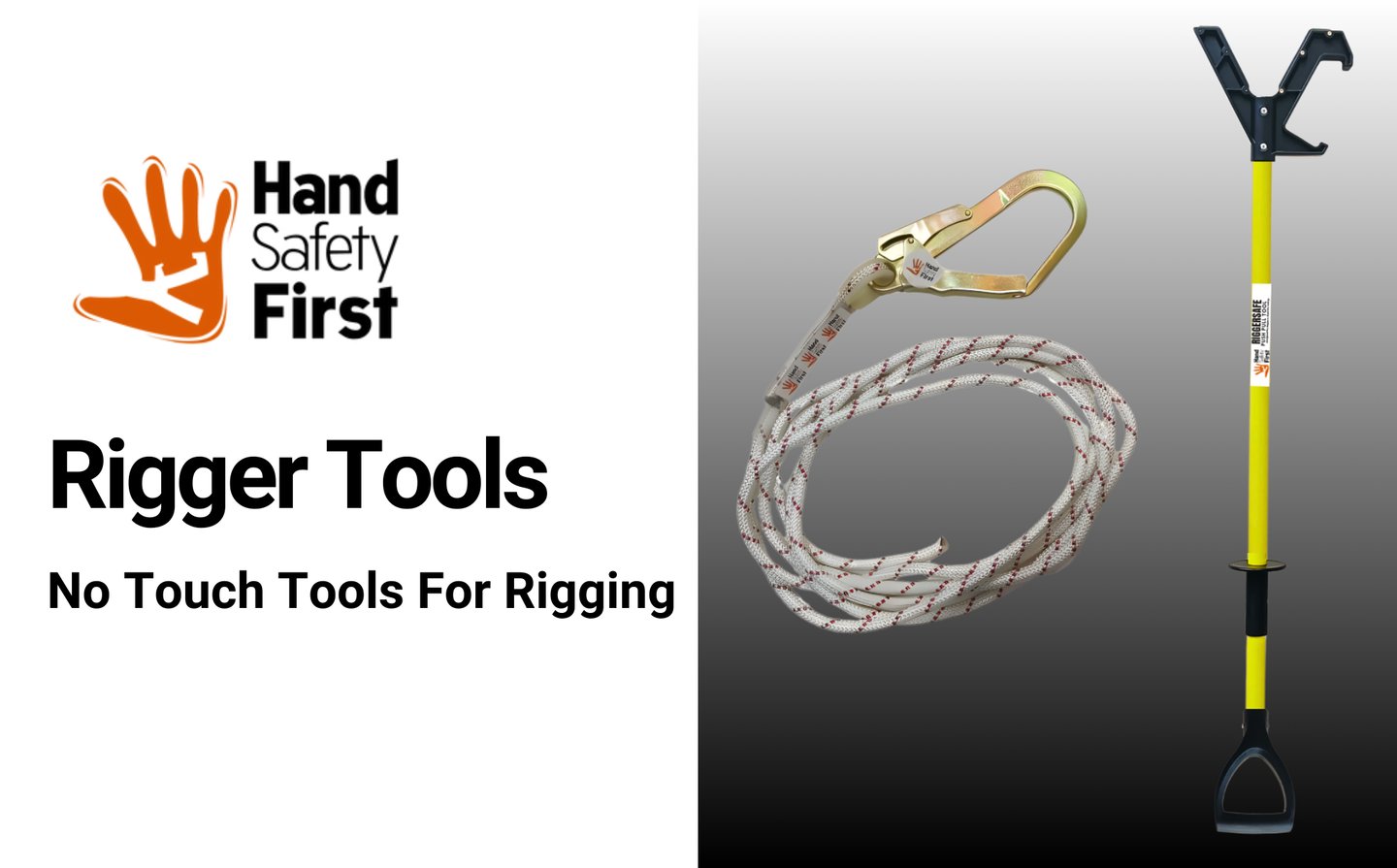
Rigger Tools - No Touch Tools for Rigging
Safer Load Control. Better Precision. Fewer Hand Injuries.
Riggers should never have to choose between getting the job done and keeping their hands safe. RiggingTools.com by Hand Safety First is dedicated to one mission: keeping hands out of the line of fire during lifting and load-handling operations.
We educate riggers, supervisors, and safety leaders on how no touch tools transform everyday rigging work—reducing hand injuries, improving control of suspended loads, and supporting compliance with modern safety standards.
Learn the tools. Upgrade your rigging safety.
What Is Rigging – And Why Tools Matter
Rigging is the art and science of lifting, positioning, aligning, and stabilizing heavy loads using cranes, hoists, rigging hardware, and structural anchor points. In real-world operations, this includes:
Connecting slings, shackles, and hooks to loads.
Guiding and rotating suspended components into final position.
Aligning equipment for bolting, welding, or fitting.
Controlling swing, drift, and rotation during crane moves.
Traditional rigging methods often rely on hands-on contact with loads: pushing, pulling, and guiding with fingers just inches from pinch points, crush zones, and impact paths. This approach creates several problems:
High risk of finger and hand crush injuries.
Reduced reaction time if a load shifts unexpectedly.
Poor control when loads swing, rotate, or snag.
Pressure on riggers to “grab it and go” rather than work at a safe distance.
The right no touch tools change the rigging workflow. They allow workers to maintain distance, preserve control, and keep hands away from risk—without slowing down the job.
The Problem: Hands Too Close to the Danger Zone
In rigging, the most common hand injuries occur when workers:
Guide suspended loads by hand, especially near corners, edges, and structural steel.
Reach into tight gaps to align holes, pins, and flanges.
Stabilize rolling or shifting components during placement.
Try to “stop” a swinging load with bare hands or a shoulder.
These habits lead to:
Pinch and crush injuries between the load and fixed structures.
Impact injuries from sudden swings, snags, or line failures.
Lacerations and abrasions from sharp edges, burrs, and rough surfaces.
Long-term issues like reduced grip strength and manual dexterity.
PPE gloves help, but they cannot remove the hazard. Hand Safety First and Riggertools.com focus on eliminating hand exposure at the source by replacing direct contact with engineered no touch control tools.
What Are No Touch Tools for Rigging?
No touch tools are purpose-built devices that let riggers control, position, and stabilize loads without placing their hands directly on the load or hardware. They extend reach, increase leverage, and create a buffer zone between the worker and the hazard.
Key characteristics of professional no touch rigging tools include:
Adequate length to maintain safe distance from suspended loads.
High-visibility designs to improve coordination and communication.
Strong, durable materials suitable for industrial environments.
Ergonomic grips to reduce fatigue during long lifts.
Tool heads engineered for pushing, pulling, hooking, or capturing.
At Riggertools.com, we explain which tools to use for which task, why design matters, and how to integrate them into your rigging procedures as standard practice—not as optional accessories.
Why No Touch Tools Are Essential
No touch tools for rigging are not just “nice to have.” They are a critical control measure in high-risk lifting environments.
Key benefits:
Increased distance from danger zones
Riggers can guide, pull, or push loads from a safer position, away from pinch and crush points.Improved load control
Purpose-built tips and heads give better control than gloved hands, especially on smooth, painted, oily, or irregular surfaces.Reduced hand and finger injuries
Keeping hands away from the load reduces the likelihood of being struck, crushed, or cut.Better team coordination
A visible tool is easier for crane operators and signalers to see than a hand, improving communication and alignment.Support for safety culture and compliance
Using no touch tools shows a proactive approach to risk reduction that aligns with many site-specific and corporate safety expectations.
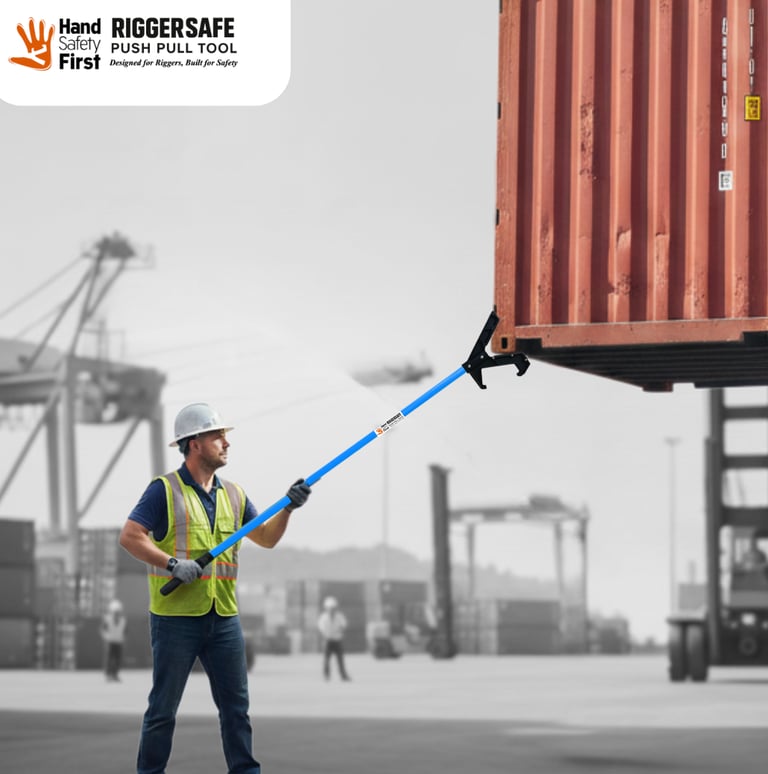
Example: Instead of a rigger placing a hand on the corner of a steel beam to prevent swing, a no touch push/pull tool with a non-slip head can stabilize and steer the load while the worker stands clear of the pinch point between the beam and a column.
Who riggertools.com Is For
Hand Safety First created Riggertools.com for professionals who work around suspended or shifting loads and want to reduce hand exposure without sacrificing productivity:
Industrial riggers and lifting specialists.
Construction and infrastructure teams handling structural steel, precast, and heavy modules.
Oil, gas, and power plant crews managing equipment lifts, maintenance lifts, and shutdown work.
Shipyard and marine teams moving large components, plates, and modules.
Heavy engineering and fabrication shops handling assemblies, weldments, and fixtures.
Safety managers, lifting authorities, and site supervisors setting standards for safe rigging practices.
If your work involves hooking, lifting, turning, or landing heavy loads, the tools and practices we cover can significantly reduce hand injuries and improve overall rigging discipline.
How No Touch Tools Improve Rigging Safety
No touch tools fit naturally into each phase of a lift when properly selected and used.
Pre-lift positioning
Use alignment and tag-style tools to position slings, spreader bars, and hardware without climbing over loads or reaching into pinch points.Lifting and travel
Use push/pull tools to control swing, rotation, and drift while maintaining safe clearance from load corners and edges.Final alignment and landing
Use alignment and capture tools to nudge loads into position, line up bolt holes, and align flanges without placing fingers between mating surfaces.Recovery and troubleshooting
When loads snag, catch, or shift unexpectedly, a no touch tool gives riggers a safer way to free and re-align components, instead of reaching in by hand.
By adopting this workflow, crews standardize on “hands off the load” as a default expectation. Riggertools.com provides the guidance to make that shift realistic and sustainable on busy, high-pressure sites.
Core Categories of Rigger Tools
At Hand Safety First, we design no touch tools that give riggers precise control over suspended loads while keeping hands out of danger zones. On RiggerTools.com, two core tool families form the foundation of safer, modern rigging practice.
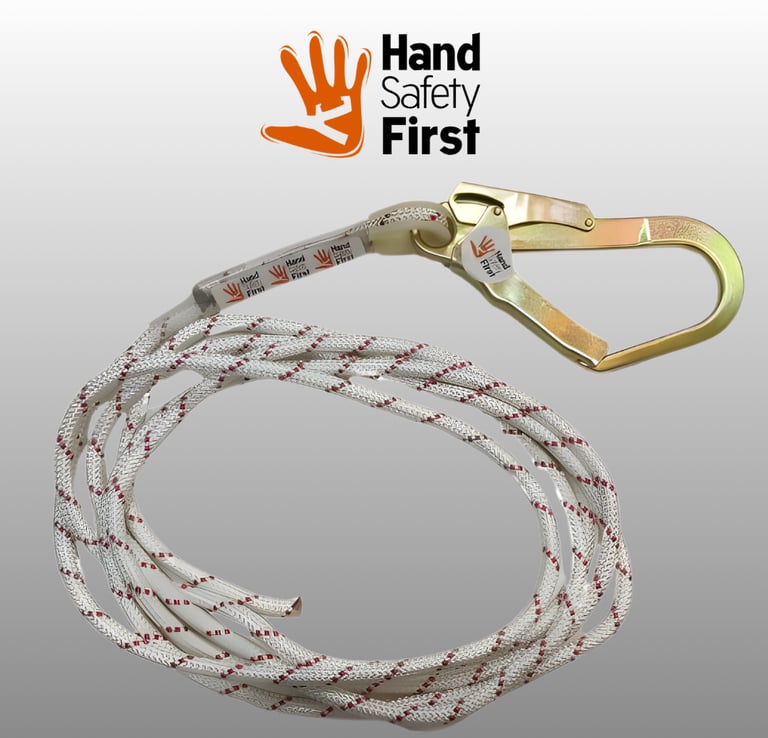
HSF LoadGrab Rigger Tagline
Safe Load Stabilization from a Distance
Introduction
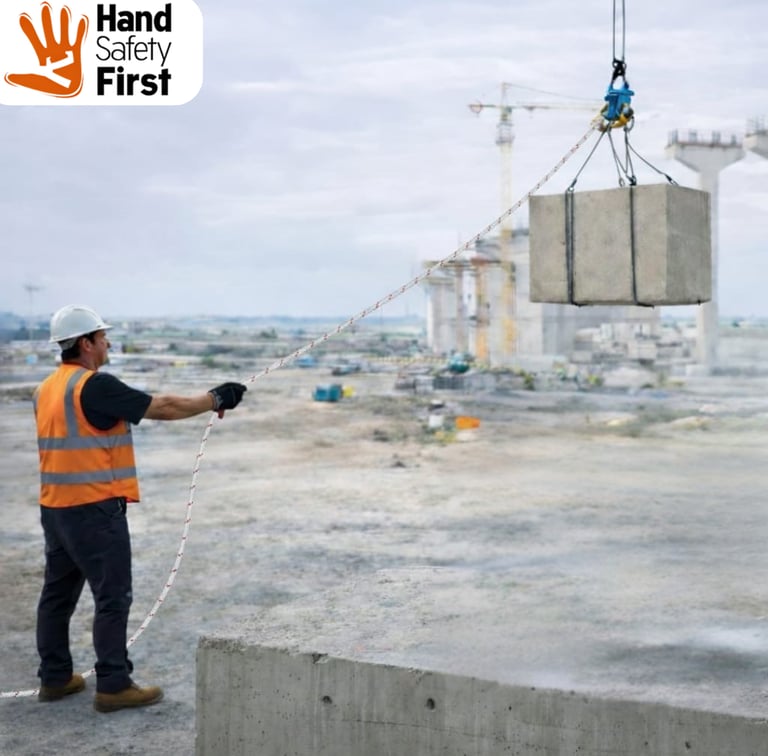
The HSF LoadGrab Rigger Tagline allows riggers to guide and stabilize suspended loads from a safe distance. It helps prevent swinging, spinning, and collisions while ensuring accurate placement—especially in windy or restricted conditions.
Applications
Lifting single or bundled steel pipes.
Handling steel plates and structural components.
Installing large components in high-rise and infrastructure projects.
Stabilizing loads in windy or open environments.
Managing heavy or oversized loads using multiple taglines.
Key Features
Keeps hands and bodies out of danger zones around suspended loads.
Improves control throughout lifting, travel, and landing.
Ideal for tight spaces, blind lifts, and precision placements.
Durable, abrasion-resistant construction for tough industrial conditions.
Enhances coordination between riggers and crane operators.
HSF RiggerSafe Push Pull Tool
Hands-Free Positioning and Load Guidance
Introduction
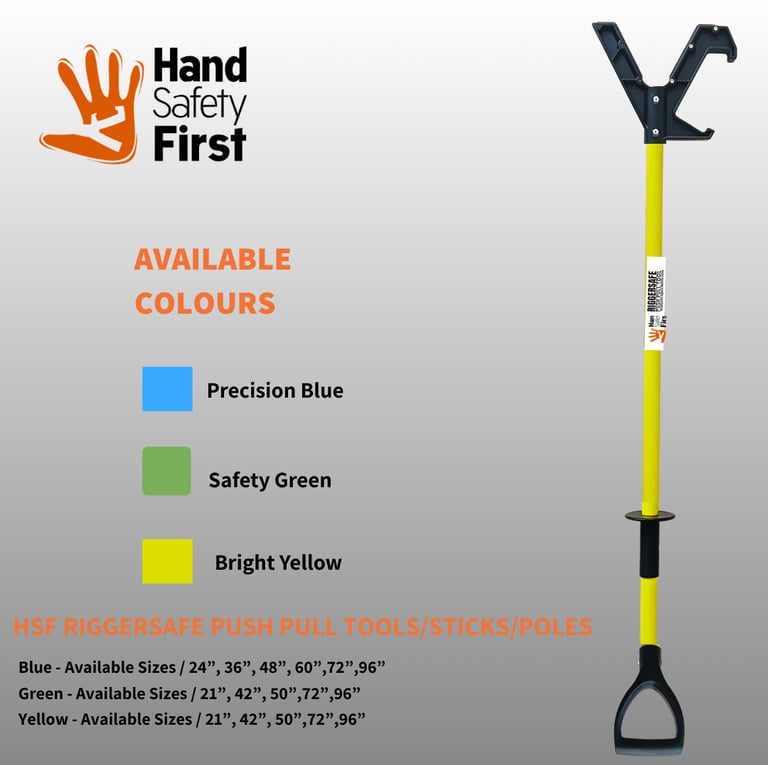
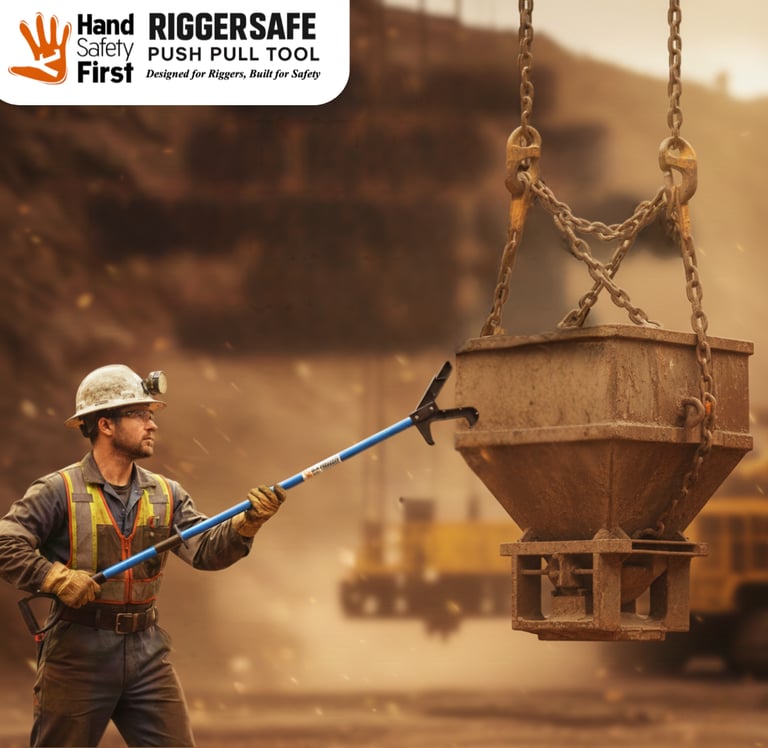
The HSF RiggerSafe Push Pull Tool is engineered to push, pull, guide, and position loads without direct hand contact. It replaces unsafe improvised methods with controlled, hands-free rigging—especially in confined or elevated work areas.
Available Sizes and Colours
Sizes: 21”, 24”, 36”, 42”, 48”, 50”, 60”, 72”, 96”.
Colours: Precision Blue, Safety Green, Bright Yellow for high visibility on site.
Design and Safety Features
Non-conductive fibreglass shaft suitable for harsh and electrically sensitive environments.
Ergonomic D-handle to reduce fatigue and improve grip.
Wide-face push head for stable, predictable load contact.
Integrated safety guard to help prevent hands from sliding toward the load.
Why Use No Touch Tools Instead of Manual Handling
Manual rigging methods often expose workers to unnecessary risk, especially near suspended loads and fixed structures.
Improvised or bare-hand methods
Higher injury risk, poor load control, and increased fatigue lead to more near-misses and incidents.Purpose-built rigging tools
Hands remain clear of danger zones, load movements are more precise and stable, and overall site safety and compliance improve.
Using dedicated tools like the HSF LoadGrab Rigger Tagline and HSF RiggerSafe Push Pull Tool turns “hands off the load” from a guideline into daily practice.
Rigging Safety Best Practices
True rigging safety is built on distance, control, and correct tool selection. While gloves and PPE are important, they do not replace properly engineered tools that prevent exposure in the first place.
Maintain safe distance from pinch and crush points whenever possible.
Use the right tool for load guidance, alignment, and stabilization.
Make “no hands on the load” a standard expectation across your lifts.
Using the right tools supports safer, more efficient lifting operations and a stronger safety culture.
Why riggertools.com
RiggerTools.com supports the Hand Safety First mission: prevent hand injuries at their source.
We focus on:
Educating riggers and safety teams with practical, field-ready guidance.
Promoting safer rigging practices and no touch workflows.
Supporting hand injury prevention programs and safety initiatives.
Recommending professional-grade, purpose-built rigging tools.
We believe safer job sites begin with better knowledge and better tools, and every resource we create reflects that belief.
How to Choose the Right Rigging Tool
When selecting no touch tools for your operation, consider:
Load type, shape, and weight.
Required distance from pinch points and structures.
Precision needed during final placement and alignment.
Work environment (height, wind, confined spaces, electrical risk).Frequency and criticality of the lifting operation.
Choosing the right tool improves safety and productivity, while reducing fatigue and unplanned downtime.
FAQs
What are no touch tools for rigging?
No touch tools are devices that allow load control, alignment, and positioning without direct hand contact with the load or rigging hardware.
Do these tools replace gloves or PPE?
No. PPE protects hands from incidental contact and environmental hazards; no touch tools prevent hands from entering high-risk zones in the first place.
Are these tools suitable for heavy industries?
Yes. They are designed for use in construction, oil and gas, marine, power generation, mining, and heavy engineering environments.
Get Tool Guidance or Product Information
Need help selecting the right no touch tools for your rigging operations? The Hand Safety First team can help you match tools to tasks, environments, and safety goals.
Contact us for:
Product details and specifications.
Safety guidance and best-practice recommendations
Application support for specific rigging scenarios.
📞 +91 73861 10618
✉️ info@handsafetyfirst.com
🌐 handsafetyfirst.com
Announcement: PSC Hand Safety India Pvt Limited has entered into a definitive agreement to acquire the brand Hand Safety First effective on Oct 31, 2025
Contact
info@handsafetyfirst.com
+91 73861 10618
website
riggertools.com

PHONE
Reach out with any questions or feedback.